MOM Well Done Mom: A Designer's Review for Real Projects
As a designer who spends more time staring at stitch maps than most people spend on their phones, I approach every new machine embroidery design with a healthy dose of skepticism. We have all been there: you download a cute graphic, load it onto your machine, and halfway through the run, you realize the satin columns are too wide or the underlay is non-existent. That is why I took a close look at the MOM Well Done Mom design before committing it to a client project. This isn't just about whether it looks good on a screen; it is about how it performs as a physical embroidery project that needs to survive washing, wearing, and the critical eye of a paying customer.
First Impressions and Visual Personality
When I first pulled up the digital embroidery file for MOM Well Done Mom, the immediate takeaway was its versatility. The layout feels balanced, avoiding the cluttered look that plagues many quote-based designs in the Crafts category. The typography appears sturdy enough to hold up well when translated into thread, which is crucial. In the world of Graphics, a vector line might look perfect, but in embroidery, thin lines can disappear into the fabric pile. This design seems to have enough weight to it, suggesting it would work beautifully as a focal point on a tote bag or a chest logo on a sweatshirt.
The mood of the piece is celebratory yet grounded. It avoids being overly cutesy, which makes it suitable for a wider demographic than just baby showers. I could easily see this working for a "Mother of the Year" gift from a grown child or a fun statement piece for a mom who runs a small business. The visual personality suggests confidence, which translates well into a handmade product that feels professional rather than amateurish.
Real-World Application: The Tote Bag Test
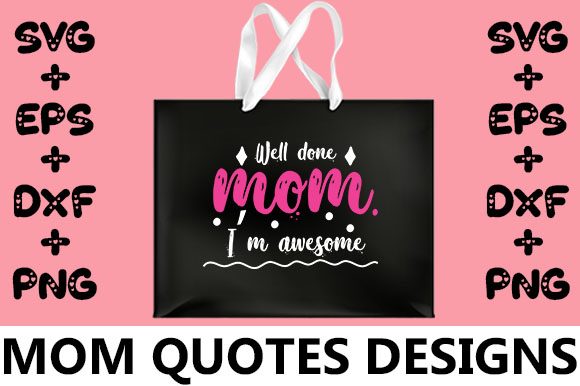
To truly evaluate MOM Well Done Mom, I imagined a specific real-life scenario: creating a limited run of canvas tote bags for a local boutique's Mother's Day collection. Canvas is a forgiving fabric, but it has a distinct texture that can eat up fine details. For this application, the design's structure is a major plus. If this were an applique design, I would be checking the placement files rigorously, but as a standard stitch-out, the focus is on how the thread interacts with the weave.
For a tote bag design like this, I would recommend using a cut-away stabilizer. Even though canvas is stable, the repeated stress of carrying groceries or diapers requires the stitching to remain dimensionally stable over time. The density of the text in MOM Well Done Mom looks sufficient to cover the fabric without gaps, provided you match your thread colors correctly against the bag color. A high-contrast combination, like white thread on a navy bag, would make the lettering pop, while a tonal approach might offer a more subtle, boutique feel.
Apparel and Soft Goods Considerations
Moving beyond bags, let's talk about custom apparel. If you are planning to use this for sweatshirt embroidery, you need to consider the loft of the fleece. Thick fabrics can sometimes swallow smaller text. While MOM Well Done Mom appears legible, I would advise doing a test run on a scrap piece of the exact same fleece you plan to use. Check if the fill stitch areas sink too deep or if the satin stitch borders raise up too high, creating a tripping hazard for the needle in subsequent passes.
This design also holds promise for baby embroidery projects, such as bibs or onesies. However, caution is key here. Babies have sensitive skin, so you must ensure the back of the stitching is clean. If the design includes dense areas, using a soft topper can help prevent the stitches from sinking into the knit fabric, ensuring the finished product remains comfortable. For a personalized gift intended for a newborn, the durability of the wash is paramount, so locking down those edges with proper underlay is non-negotiable.
Navigating Technical Challenges
No design is perfect for every situation, and honest review means pointing out where MOM Well Done Mom requires careful handling. One area of concern with any text-heavy design is the hoop size. If you are working with a small 4x4 hoop, you might be forced to resize the design down. Be very careful here. Shrinking text can lead to merged letters where the running stitch or satin columns blend together, rendering the message unreadable. Always check the minimum recommended size before hooping up.
Textured fabrics present another challenge. If you are stitching this onto a waffle knit or a heavily textured linen, the background noise of the fabric can interfere with the clarity of the design. In these cases, a heavier topping is essential to bridge the gaps in the fabric texture. Similarly, curved surfaces like caps require a different approach. Stitching MOM Well Done Mom on a dad hat would look great, but you must account for the curvature. The center of the design might pull differently than the edges, potentially distorting the spacing between words.
Dark fabrics are another consideration. If the design relies on light threads, you may need to adjust the underlay or add a layer of white stabilizer underneath to prevent the dark fabric from showing through the stitches, a phenomenon known as "grinning." This is especially important for maintaining the professional look required by serious Etsy sellers and craft business owners.
Commercial Viability and Brand Value
For those running a small shop product line or selling design assets, the perceived value of the finished product is everything. MOM Well Done Mom has a clean aesthetic that elevates the item it is stitched on. It doesn't look like a generic clip-art dump; it looks intentional. This level of quality builds customer trust. When a buyer sees crisp edges and well-managed thread transitions, they associate that quality with your brand.
If you are an Etsy seller looking to expand your holiday inventory, this design fits perfectly into the holiday embroidery niche for Mother's Day. It can also serve as a year-round bestseller for birthday gifts. The versatility allows you to create a cohesive collection—matching mugs (using the PNG files), t-shirts, and tote bags. Speaking of the file formats, the availability of EPS and DXF alongside the embroidery files is a significant bonus. It allows you to create printable mockups for your online store without having to stitch every single sample, saving you time and materials while still showcasing how the commercial embroidery will look.
Final Designer Notes and Best Practices
Before you commit to a full production run of MOM Well Done Mom, here are my practical recommendations. First, always test the design on a scrap of your actual production fabric. Thread tension can vary between machines, and what looks good on my Brother might need tweaking on your Janome. Second, pay attention to stitch density. If you are using a metallic thread, you may need to reduce the density slightly to prevent breakage.
Verify the licensing terms explicitly. While the description mentions suitability for various products, confirming whether the license covers unlimited commercial sales or requires attribution is vital for protecting your craft business. Finally, consider the end user. Will this item be thrown in the dryer weekly? If so, reinforce your stabilizer choices. A little extra prep time ensures that your embroidered patch or garment stands the test of time.
In conclusion, MOM Well Done Mom is a solid contender for your digital library. It balances aesthetic appeal with practical stitchability. Whether you are making a one-off personalized gift or stocking shelves for a boutique, this design offers the flexibility and professionalism needed to succeed in today's competitive handmade market. Just remember: the difference between a good product and a great one often lies in the preparation and the respect you show for the materials.